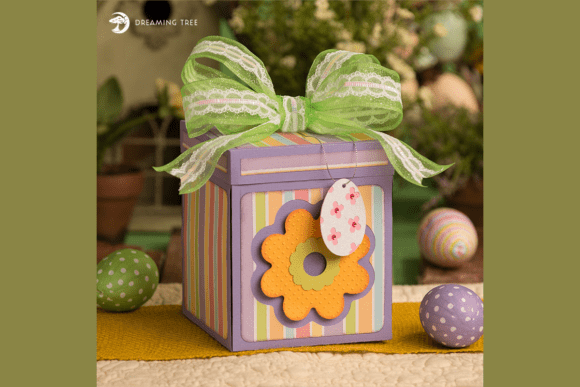
Integrating the Easter Explosion Box SVG into Your Creative Workflow
The intersection of digital design and tangible craft offers a unique opportunity for creators, educators, and small business owners to produce high-impact physical assets with precision. Among the many seasonal projects available, the Easter Explosion Box SVG stands out not merely as a decorative item, but as a structured engineering challenge that rewards careful planning and execution. This interactive paper craft bursts open to reveal a festive springtime scene, adorned with cheerful bunnies, vibrant eggs, and blooming florals. For those managing creative workflows, understanding how to integrate this specific design into your production pipeline can streamline output, reduce material waste, and enhance the perceived value of your final product.
Whether you are a hobbyist looking to elevate your gifting strategy or an entrepreneur creating inventory for a spring market, the process begins long before the cutting machine starts. The success of an explosion box relies heavily on preparation, material selection, and assembly logic. By treating the Easter Explosion Box SVG as a component of a broader project management task, you ensure consistency and quality in every unit produced.
Pre-Production Planning and Material Logistics
Before importing files into your cutting software, effective workflow management requires a thorough review of the supply list. Unlike simple cut-and-fold projects, explosion boxes involve multiple layers that must interact mechanically. The design specified here results in a finished dimension of 6 inches in height by 5 inches in width and depth. To achieve this structural integrity, specific cardstock weights and colors are essential.
Your procurement phase should account for the following materials, organized by function:
- Structural Base: Four sheets of 12x12 Pansy Cardstock provide the primary framework.
- Accent Layers: One sheet each of Dandelion, Powder, Limeade, Cotton Candy, Lemon, and White Cardstock creates the visual depth required for the 3D effect.
- Decorative Elements: Two sheets of 12x12 Striped Pattern Paper add texture, while one sheet of 8.5x11 White Cardstock is reserved for intricate details or inserts.
From a logistical standpoint, batching these materials is crucial. If you are producing multiple units for a business or classroom setting, pre-cutting your cardstock stacks to the exact 12x12 dimensions ensures compatibility with standard cutting mats. This step minimizes alignment errors during the digital setup phase. Furthermore, organizing your paper by color family before you begin cutting reduces the cognitive load during assembly, allowing you to focus on the mechanical construction rather than searching for supplies.
Digital Setup and Machine Compatibility
The Easter Explosion Box SVG is delivered in SVG format, accompanied by a PDF legend. This dual-format delivery is a significant workflow advantage. The SVG file ensures vector scalability and clean cut lines, while the PDF legend serves as a visual reference guide for piece identification. This separation of data (cut files) and instruction (visual guide) allows for a more flexible working environment.
When preparing your digital workspace, consider the following implementation tips:
- Software Integration: The design is fully compatible with all SVG-ready cutting machines and software. Whether you use proprietary software or third-party applications, verify that your import settings preserve the layer structure. Do not ungroup elements prematurely, as this can disrupt the intended cut order.
- Scaling Considerations: While the design is optimized for 12x12 cutting machines, it can be resized to fit specific needs. However, note that final dimensions may vary slightly from the original if scaled disproportionately. For consistent results in a production environment, maintain the aspect ratio and test-fit one prototype before committing to a full batch run.
- Color Coding via Legend: Use the provided PDF legend to assign virtual colors in your cutting software that match your physical cardstock. This visual mapping prevents confusion when unloading the mat, ensuring that each piece is immediately identifiable for its correct position in the assembly sequence.
This digital preparation phase is where efficiency is gained or lost. Taking ten minutes to organize layers and label mats can save hours of troubleshooting during assembly. It transforms the cutting process from a chaotic activity into a predictable, repeatable manufacturing step.
Assembly Strategy and Quality Control
Once the pieces are cut, the project transitions from digital fabrication to manual assembly. This stage requires patience and attention to detail. The layered design of the explosion box offers an engaging crafting experience, but it also demands precision. Each flap and tab must be folded accurately to ensure the box "explodes" correctly when the lid is removed.
To support this phase, a step-by-step video tutorial is included. Integrating this resource into your workflow is recommended, especially for first-time users. Rather than watching the entire video passively, use it as a reference tool. Pause at critical junctions, such as the attachment of the central column or the placement of the decorative flaps. This methodical approach reduces the risk of irreversible adhesive errors.
Quality control checkpoints should be established during assembly:
- Fold Precision: Ensure all score lines are crisp. Use a bone folder or similar tool to reinforce folds before applying adhesive. Weak folds compromise the structural integrity of the explosion mechanism.
- Adhesive Application: Use strong double-sided tape or liquid glue suitable for cardstock. Apply adhesive sparingly to avoid seepage, which can stain visible surfaces. Allow adequate drying time between layers to prevent warping.
- Layer Alignment: Verify that each decorative layer aligns symmetrically with the base. Misalignment at the bottom layers compounds as you build upward, leading to a skewed final product.
For educators or workshop leaders, this assembly process can be broken down into modular tasks. Assign specific stages to different participants, such as one group handling folding and another handling adhesion. This division of labor mirrors professional production lines and can significantly increase throughput while maintaining quality standards.
Strategic Applications and End-Use Scenarios
Understanding where the Easter Explosion Box SVG fits in your broader objectives helps maximize its value. This is not just a craft; it is a versatile medium for communication and engagement.
For Small Business Owners and Marketers: Use the explosion box as a premium packaging solution for high-value items. Its interactive nature enhances the unboxing experience, encouraging social media sharing. Fill the center with branded merchandise, discount codes, or personalized notes. The memorable keepsake aspect ensures your brand remains top-of-mind long after the holiday has passed.
For Educators and Parents: This project serves as an excellent STEM activity, teaching principles of geometry, spatial reasoning, and engineering. The requirement to follow a legend and assemble complex layers fosters fine motor skills and sequential thinking. It can be integrated into lesson plans focusing on spring traditions, art history, or mathematical symmetry.
For Content Creators and Bloggers: Documenting the creation process provides rich content for tutorials, reels, or blog posts. The visual appeal of the bursting box makes for compelling thumbnail imagery. By sharing your workflow, including tips on material selection and assembly hacks, you establish authority and engage your audience with practical, actionable advice.
Long-Term Value and Asset Management
Investing in a high-quality Easter Explosion Box SVG yields returns beyond a single holiday season. The file is a reusable asset. Save your customized color palettes and cut settings in your software library for future use. This creates a template for rapid deployment in subsequent years, reducing setup time and ensuring brand or style consistency.
Moreover, the skills developed through this project—such as precise scoring, layered adhesion, and spatial visualization—are transferable to other papercraft endeavors. As you refine your technique, you will find that the efficiency gains compound, allowing you to take on more complex designs with confidence.
In conclusion, the Easter Explosion Box SVG is more than a seasonal decoration; it is a testament to the power of thoughtful design and disciplined execution. By approaching it with a process-oriented mindset, you transform a simple craft into a polished, professional-grade outcome. Whether for gifting, teaching, or selling, this project offers a delightful blend of creativity and structure, capturing the joy of the season in a tangible, interactive format.