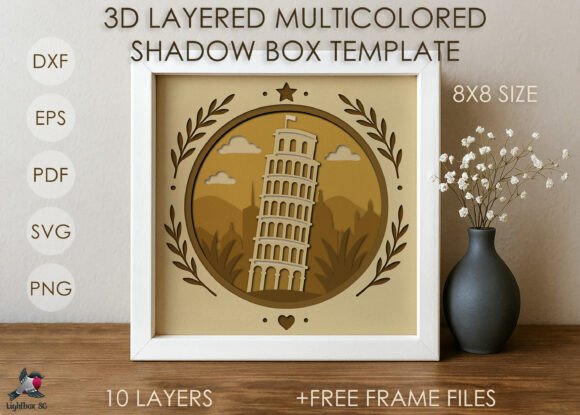
Leaning Tower of Pisa Shadow Box SVG
There is a unique satisfaction in transforming flat paper into a scene that breathes with depth and light. The Leaning Tower of Pisa Shadow Box SVG offers exactly this opportunity, inviting creators to build a three-dimensional masterpiece from layered cardstock. This digital template is not merely a collection of lines; it is a blueprint for a decorative art piece that captures the iconic tilt of one of Italy's most famous landmarks. Whether you are a seasoned papercraft artist or a parent looking for an engaging weekend project, this design bridges the gap between digital precision and tactile creativity.
The appeal of this specific shadow box lies in its architectural complexity rendered through simplicity. By utilizing multiple layers, the design creates an illusion of distance and perspective. When backlit by an LED strip, the shadows cast by the inner layers against the outer frame bring the tower to life, mimicking the golden hour glow of the Tuscan countryside. It transforms a standard wall decoration into a focal point that sparks conversation and evokes memories of travel, even for those who have never visited Italy.
Understanding the Design Structure
At its core, the Leaning Tower of Pisa Shadow Box SVG is a multi-layered composition designed to fit within an 8 x 8 inch frame. The template includes seven distinct illustrations, each serving as a separate plane in the final assembly. These layers range from the background scenery to the intricate details of the tower itself and the surrounding foliage. The design philosophy relies on negative space and overlapping elements to create a sense of volume.
What makes this template particularly effective is its adaptability. The smooth lines are engineered for both machine cutting and hand cutting. If you own a Cricut, Silhouette, or Brother cutting machine, the vector files ensure crisp edges and perfect registration. However, the design does not exclude those without expensive equipment. The clean geometry allows for precise cutting with a simple art knife and scissors, making it accessible to a wider audience. The result is a consistent, professional finish regardless of the tools used.
Creative Applications and Styling Ideas
Once the pieces are cut and assembled, the possibilities for styling are vast. The most immediate application is as a glowing lightbox. By placing an LED strip behind the deepest layer of the box, the light filters through the colored cardstock, creating a warm, ambient atmosphere. This is ideal for bedrooms, home offices, or nurseries where soft lighting is preferred over harsh overhead fixtures.
For those interested in interior design, this shadow box serves as a versatile accent piece. You can choose cardstock colors that match your existing decor. For a classic Italian feel, use warm terracotta, deep ochre, and cream tones. Alternatively, modernize the look with cool blues, grays, and stark whites to create a contemporary abstract interpretation of the landmark. The decorative patterned frame included in the template adds an extra layer of sophistication, allowing the artwork to stand out even when the lights are off.
Educators and parents will find this template invaluable for children’s creative projects. Building the shadow box teaches spatial awareness, fine motor skills, and patience. Children can be involved in selecting the colors, cutting the simpler shapes, and assembling the layers under supervision. It turns a history lesson about architecture into a hands-on experience, fostering a deeper connection to the subject matter.
Practical Guide to Assembly and Materials
To achieve the best results, preparation is key. The digital download provides everything needed to start, including SVG, DXF, EPS, PDF, and PNG files, along with a detailed readme.txt instruction file. Before beginning, gather the necessary materials. A reliable printer is essential if you plan to print templates for hand-cutting. For machine users, ensure your software is set up correctly to handle the vector paths.
- Paper Selection: Use 65 lb (170-180 gsm) cardstock. This weight is critical; it is thick enough to hold its shape and prevent light from bleeding too much between layers, yet thin enough to cut cleanly without fraying.
- Cutting Tools: An art knife with fresh blades works best for hand cutting. For machines, a standard blade is usually sufficient, but test cuts are recommended to adjust pressure settings.
- Assembly Adhesives: Double-sided foam tape is highly recommended. It creates the necessary separation between layers, which is vital for the shadow effect. Standard glue may cause warping or insufficient spacing.
- Housing: A deep box frame is required to accommodate the depth created by the stacked layers. Glass or plastic covers protect the finished piece from dust while maintaining visibility.
The process involves cutting each of the seven illustrations from different sheets of paper. Once cut, assemble them in order, starting with the background layer at the bottom of the box and working forward to the foreground. The spacing between layers should be consistent to maintain the optical illusion of depth. If using LEDs, secure the power supply discreetly at the back of the frame before sealing it.
Adapting the Template for Different Goals
The flexibility of the Leaning Tower of Pisa Shadow Box SVG extends beyond personal decoration. Small business owners and craft entrepreneurs can utilize these files to create custom gifts. Imagine packaging this shadow box as a premium souvenir for travelers returning from Italy or as a housewarming gift for someone with a love for European culture. The ability to resize the images means you can scale the design to fit larger frames for commercial displays or smaller ones for desk accessories.
Designers and bloggers can also leverage this template for content creation. Tutorials on how to make the shadow box can drive traffic to websites focused on DIY crafts, papercrafting, or travel-inspired decor. By documenting the process—from unboxing the digital files to the final illuminated reveal—creators can demonstrate the value of digital downloads in the physical crafting world.
Furthermore, the template encourages experimentation. Users can mix and match patterns on the cardstock, add glitter for texture, or even incorporate fabric scraps for a mixed-media approach. The structural integrity of the design remains intact, allowing for artistic freedom without compromising the final form. This balance of structure and creativity is what makes the project so enduringly popular among diverse groups of makers.
Maximizing Clarity and Consistency
To ensure your final product looks professional, attention to detail during the cutting and assembly phases is crucial. When using cutting machines, perform a test run on scrap paper to verify that the blade depth is correct. Over-cutting can damage your mat, while under-cutting leaves jagged edges that ruin the silhouette. For hand-cutters, work on a self-healing mat and change your blade frequently to maintain sharpness.
Consistency in color selection also plays a significant role. While mixing colors is fun, sticking to a cohesive palette ensures the layers blend harmoniously rather than clashing. Consider the lighting conditions of the room where the box will hang. Warmer tones glow beautifully under yellow LEDs, while cooler tones benefit from white light. Planning ahead prevents the need to redo layers after assembly.
Ultimately, the Leaning Tower of Pisa Shadow Box SVG is more than a digital file; it is a tool for expression. It empowers individuals to bring a piece of architectural history into their homes through the medium of paper. Whether crafted for joy, education, or profit, the project stands as a testament to the power of combining traditional crafting techniques with modern digital design. With the right materials and a bit of patience, anyone can create a stunning, glowing tribute to the leaning tower that will be admired for years to come.