Moroccan Tile Greeting Card SVG
In the world of paper crafting, few designs command attention quite like the intricate geometry found in traditional Moroccan architecture. The Moroccan Tile Greeting Card SVG brings this timeless aesthetic into your digital workflow, offering a richly layered design that transforms simple cardstock into a statement piece. This is not merely a flat cut file; it is a structured project designed to create depth through precise layering and vibrant color blocking. Whether you are a seasoned designer looking for a new challenge or a hobbyist eager to impress with handmade gifts, this square card format provides a perfect canvas for creativity.
The appeal of this specific design lies in its complexity made accessible. Traditional Moroccan tilework, known as zellige, relies on mathematical precision and repeating geometric patterns. Translating this into a greeting card requires careful planning, which is exactly what this SVG file delivers. By utilizing intricate geometric cutouts and multiple layers, the final product achieves a three-dimensional quality that standard single-layer cards simply cannot match. It elevates the recipient's experience, turning a simple birthday wish or thank-you note into a tangible work of art.
Understanding the Design Structure
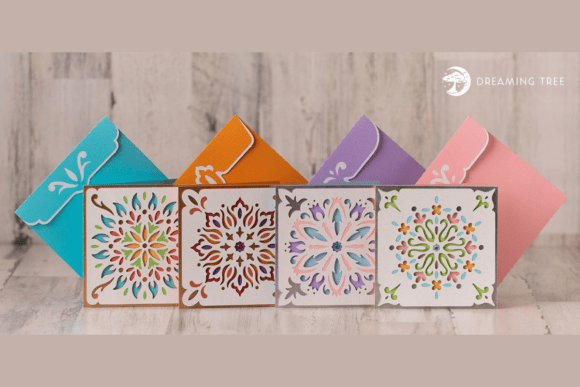
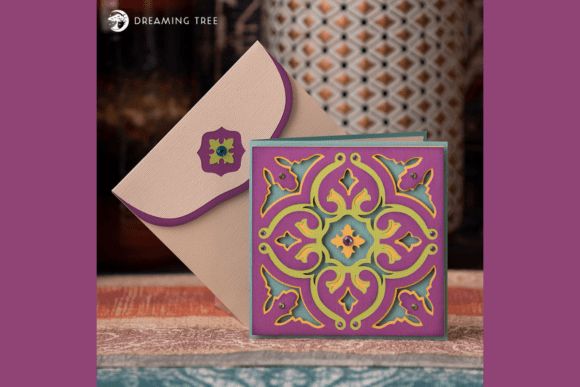
To get the most out of the Moroccan Tile Greeting Card SVG, it is essential to understand how the layers interact. The file is engineered for 12″×12″ cutting mats, ensuring compatibility with the vast majority of SVG-ready cutting machines on the market today. The design does not rely on a single sheet of paper but rather builds upon a foundation of contrasting colors and textures. This approach allows for a "window" effect where different colored layers peek through the cutouts of the top layer, creating a mosaic-like appearance reminiscent of the tiles themselves.
The included PDF legend is a critical component of this process. Unlike many generic cut files that leave users guessing about color placement, this guide explicitly outlines the layering order and recommended paper selections. This documentation ensures that even first-time users can achieve professional results without trial and error. The dimensions are fixed at 6″ H x 6″ W for the card, providing a substantial square format that feels luxurious and balanced. While resizing is technically possible within your software, maintaining the original proportions is highly recommended to preserve the integrity of the geometric symmetry.
Curating Your Color Palette
One of the most exciting aspects of this project is the opportunity to experiment with color theory. The supply list suggests a specific palette featuring Vanilla, Grape, Keylime, Sunflower, and Turquoise Gemstone papers. These choices are not random; they are selected to mimic the warm earth tones and cool accents often found in North African decor. However, the beauty of an SVG file is its adaptability. You are not bound to these exact shades if your vision calls for something different.
- Monochromatic Elegance: For a sophisticated look suitable for corporate thank-you notes or formal invitations, try using varying shades of a single color family. A gradient from deep navy to pale blue across the layers can create a stunning ombre effect while retaining the geometric structure.
- Seasonal Adaptations: Swap the suggested brights for seasonal palettes. Deep reds, golds, and forest greens work beautifully for holiday cards, while pastels and soft neutrals are perfect for spring showers or baby announcements.
- Texture Play: Consider mixing materials. While the recommendation includes Encore Cardstock 80 lb cover (216 gsm) for its reliability, you might substitute one of the inner layers with patterned paper or even thin metallic sheets to add shimmer through the cutouts.
When selecting your materials, remember that the weight of the paper matters. The 80 lb cover stock mentioned in the supply list offers the rigidity needed to hold the intricate cutouts without warping, yet it remains pliable enough to fold cleanly. Using paper that is too thick may cause issues during the cutting process, while paper that is too thin may lack the structural integrity required for the multi-layer assembly.
Assembly Techniques for Professional Results
The difference between a homemade craft and a polished creation often comes down to the assembly phase. The Moroccan Tile Greeting Card SVG includes a full step-by-step video tutorial to demystify this process, but understanding the mechanics of adhesion is key. Because the design involves multiple layers, standard liquid glue can sometimes cause warping or seep through the delicate cutouts.
Foam adhesive squares are the secret weapon here. By placing small foam dots behind specific sections of the top layers, you can lift them slightly off the base, creating genuine depth. This shadow effect enhances the illusion of carved stone or raised tilework. Combine this with rhinestones placed strategically at the intersections of the geometric lines to add a touch of sparkle. Just ensure that any embellishments do not interfere with the envelope closure. The matching envelope included in the design is sized perfectly for the 6″x6″ card, completing the cohesive look.
Tips for Precision Cutting
Before committing your best cardstock to the machine, always perform a test cut on scrap paper. This allows you to adjust blade depth and pressure settings to ensure clean cuts without tearing the delicate points of the geometric shapes. Since the design features intricate cutouts, a dull blade or incorrect pressure can result in jagged edges that detract from the overall elegance. Once you have dialed in your settings, organize your mat carefully to maximize material usage, especially when working with smaller 8.5″x11″ sheets alongside the larger 12″x12″ bases.
Versatile Applications for Creators and Businesses
This design is not limited to personal use; it holds significant value for entrepreneurs and small business owners. If you run a stationery shop or offer custom gift services, the Moroccan Tile Greeting Card SVG can be a high-value product line. The perceived value of a multi-layered, hand-assembled card is significantly higher than a mass-produced alternative, allowing for better profit margins.
Marketers and bloggers can also leverage this design for content creation. Tutorials on how to assemble the card, videos showcasing the color variations, or posts discussing the history of Moroccan tilework can drive engagement and traffic. The visual nature of the finished product makes it highly shareable on platforms like Pinterest and Instagram, serving as excellent portfolio pieces for designers.
For educators and workshop leaders, this project serves as an excellent tool for teaching geometry, symmetry, and patience. The requirement to follow a specific layering order introduces students to the concept of sequential processes in design. It bridges the gap between digital design skills and physical crafting, making it a versatile educational resource.
Final Thoughts on Creative Expression
The Moroccan Tile Greeting Card SVG represents more than just a digital file; it is an invitation to slow down and appreciate the details of craftsmanship. In a digital age where instant gratification is the norm, taking the time to cut, layer, and assemble a card by hand creates a meaningful connection with the recipient. It signals that you care enough to put effort into the presentation of your message.
Whether you stick to the suggested vanilla and turquoise palette or reinvent the design with bold, modern hues, the underlying geometry ensures a result that is both functional and beautiful. By following the provided guides and utilizing the right tools, you can produce cards that stand out in any mailbox. This project proves that with the right resources and a bit of creative direction, anyone can create professional-grade stationery that leaves a lasting impression.