Stars Stripes Banner SVG: A Practical Guide to Patriotic Craft Implementation
Integrating high-quality digital assets into physical crafting workflows requires a clear understanding of both the design specifications and the execution process. The Stars Stripes Banner SVG represents more than just a decorative file; it is a structured component designed to streamline the creation of festive, layered paper décor. For professionals managing event logistics, small business owners producing custom party supplies, or hobbyists aiming for precision in their Independence Day projects, this asset offers a reliable foundation. By utilizing a pre-engineered vector format, creators can bypass the time-consuming stages of manual drafting and focus on material selection, cutting efficiency, and final assembly.
Understanding the Design Architecture and Workflow Integration
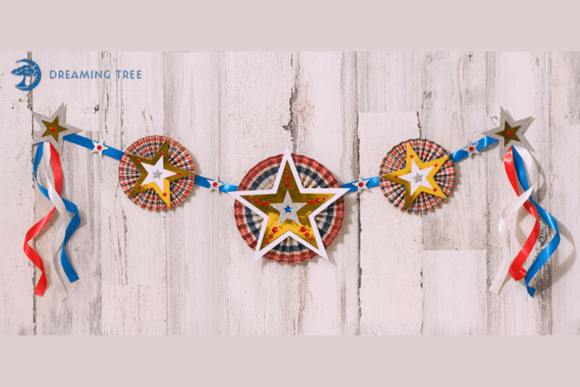
The core value of the Stars Stripes Banner SVG lies in its layered construction and compatibility with modern digital cutting ecosystems. Unlike simple silhouette files, this design incorporates bold stars and rosette-style medallions that require precise layering to achieve depth. When integrating this file into a project workflow, the first step involves assessing the software environment. Since the file is provided exclusively in SVG format, it is natively compatible with all major cutting machine platforms, including Cricut Design Space, Silhouette Studio, and other vector-based applications.
This compatibility ensures that the transition from digital planning to physical production is seamless. The design is optimized for 12×12 inch cutting machines, which is the industry standard for cardstock and specialty paper. However, the scalability of vector graphics allows for flexibility. While the finished banner measures approximately 30 inches in width by 6 inches in height, users can resize the elements to fit specific spatial constraints without losing resolution. It is important to note that resizing may alter the proportional relationship between layers slightly, so a test cut on scrap paper is a recommended quality control measure before committing premium materials.
Material Selection and Resource Planning
Successful implementation of the Stars Stripes Banner SVG depends heavily on strategic material selection. The design relies on contrast and texture to create visual impact, necessitating a curated supply list. A standard production run requires one sheet each of 12×12 white cardstock, gold foil paper, striped pattern paper, and plaid pattern paper. Additionally, incorporating an 8.5×11 sheet of white glitter paper adds a tactile dimension that elevates the finished product from a flat decoration to a dimensional accent.
Beyond the primary paper stock, the assembly phase requires specific adhesives and embellishments. Foam adhesive squares, specifically those 5/8 inches in thickness, are critical for creating the necessary lift between the star and medallion layers. This spacing prevents the design from looking flat and ensures the rosette details stand out against the background. To finalize the aesthetic, curling ribbons, rhinestones, and various glues—such as hot glue for structural integrity and Glue All for delicate paper bonding—are essential. Planning these resources beforehand prevents workflow interruptions during the cutting and assembly phases.
Optimizing the Cutting and Assembly Process
Efficiency in the cutting stage is achieved through proper organization of the digital workspace. Upon importing the Stars Stripes Banner SVG, users should utilize the included PDF legend to identify each piece accurately. This document serves as a roadmap, allowing crafters to assign specific colors to corresponding layers within their cutting software. This step is vital for maintaining color consistency, especially when working with multiple patterned papers where visual confusion can lead to wasted material.
Once the pieces are cut, the assembly process transforms individual components into a cohesive unit. The inclusion of a step-by-step video tutorial significantly reduces the learning curve for new users. This resource demonstrates the precise order of layering, ensuring that the stars and medallions align correctly. For batch production, such as fulfilling orders for a boutique or preparing decorations for a large community event, establishing an assembly line approach is effective. One station can handle cutting, while another manages the application of foam adhesive and final attachment of embellishments like rhinestones.
Strategic Applications Across Different Contexts
The versatility of this design extends beyond personal use, making it a valuable asset for various professional and creative contexts. For event planners, the Stars Stripes Banner SVG provides a customizable solution for Memorial Day, Veterans Day, and Independence Day celebrations. The red, white, and blue color scheme is universally recognized, yet the handcrafted nature of the banner adds a unique touch that mass-produced alternatives lack. Businesses can leverage this design to create branded merchandise or limited-edition party kits, offering customers a premium, DIY-friendly experience.
Educators and workshop leaders can also integrate this project into their curricula. The process teaches valuable skills in digital design, material management, and fine motor coordination. By guiding students or participants through the workflow—from interpreting the SVG file to executing the final glue-down—facilitators promote a hands-on understanding of how digital tools translate into physical objects. Furthermore, the ability to resize the banner allows it to adapt to different venue sizes, whether adorning a classroom wall or framing a corporate entrance.
Ensuring Quality Control and Long-Term Usability
Maintaining high standards in the final output requires attention to detail throughout the entire lifecycle of the project. During the cutting phase, checking blade pressure and speed settings is crucial, particularly when working with textured materials like glitter paper or foil. These surfaces can be abrasive and may dull blades faster than standard cardstock, potentially affecting the precision of intricate rosette cuts. Regularly inspecting cut pieces for clean edges ensures that the final assembly looks professional.
Long-term usability is another factor to consider. Because the design is saved in SVG format, it remains accessible across different software updates and hardware generations. This future-proofs the asset, allowing users to return to the project years later without compatibility issues. Storing the original files alongside the PDF legend and video tutorial links creates a comprehensive project archive. This organization supports repeatability, enabling creators to replicate successful batches or modify the design for future seasons with minimal friction.
Conclusion: Streamlining Creative Execution
The Stars Stripes Banner SVG exemplifies how well-designed digital assets can enhance practical workflows. By providing a clear structure for cutting, a defined material list, and supportive instructional resources, it removes common barriers to entry in paper crafting. Whether used for a single family celebration or scaled for commercial production, this tool empowers creators to execute their vision with precision and confidence. Integrating such assets into your toolkit not only improves efficiency but also elevates the overall quality of your patriotic and themed events.